August 15, 2026
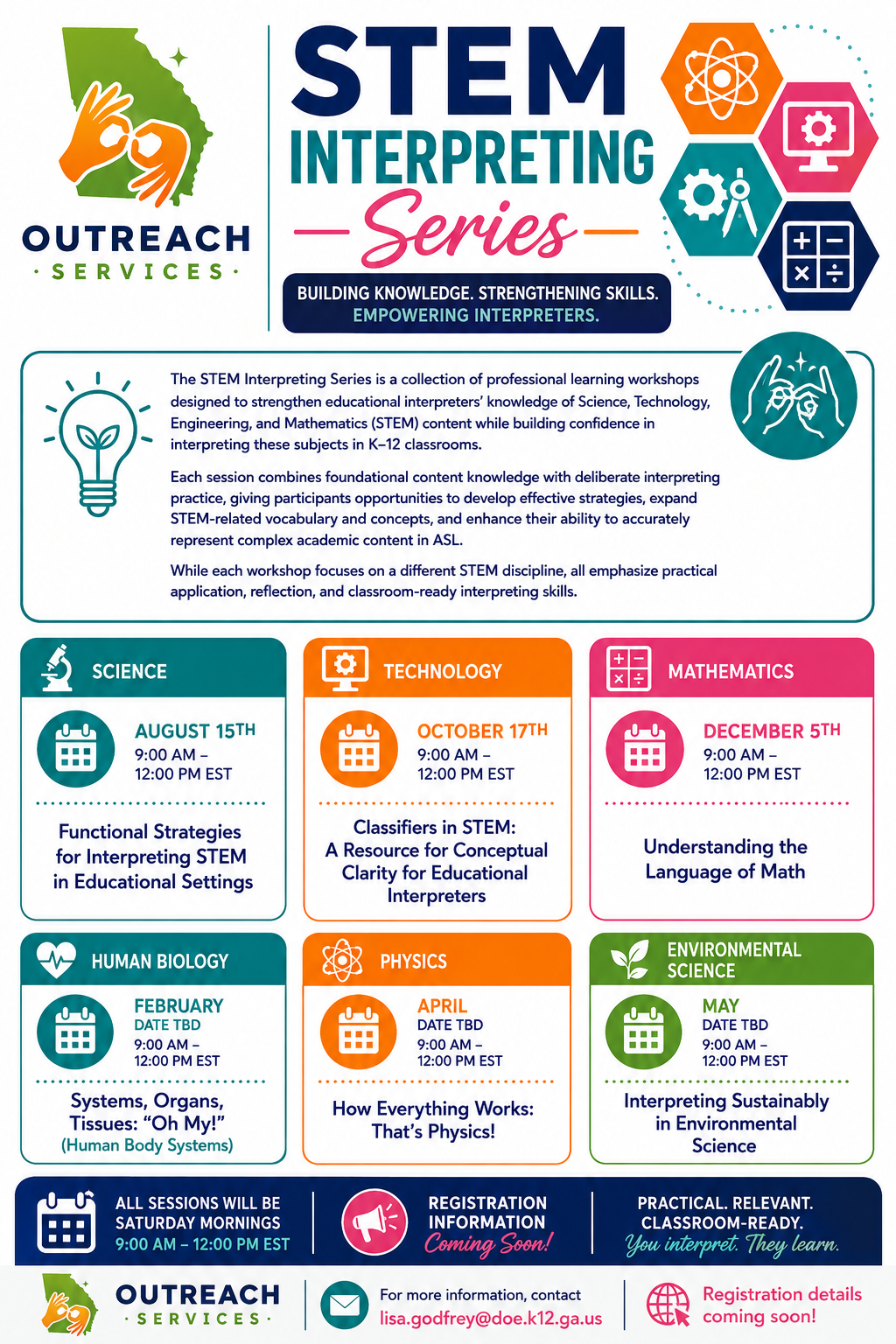
Functional Strategies for Interpreting STEM in Educational Settings
As an interpreter in a K-12 setting, what is your initial reaction when you learn you will be assigned to a Science, Technology, Engineering, and Mathematics (STEM) classroom? For some, it is an exciting opportunity. For others, the response may be, “I became an interpreter so I would not have to do math or science.” What if you felt more confident in your approach to interpreting STEM content? What if you discovered that you already possess more STEM-related knowledge than you realize? This workshop will explore how interpreters can leverage their existing world knowledge, lived experiences, and classroom resources to build confidence and improve their effectiveness in STEM settings. This is not an ASL vocabulary workshop. Instead, participants will learn practical strategies for applying extralinguistic knowledge and utilizing both traditional and nontraditional resources to strengthen their interpreting practice and expand their professional toolkit.

September 22, 2026
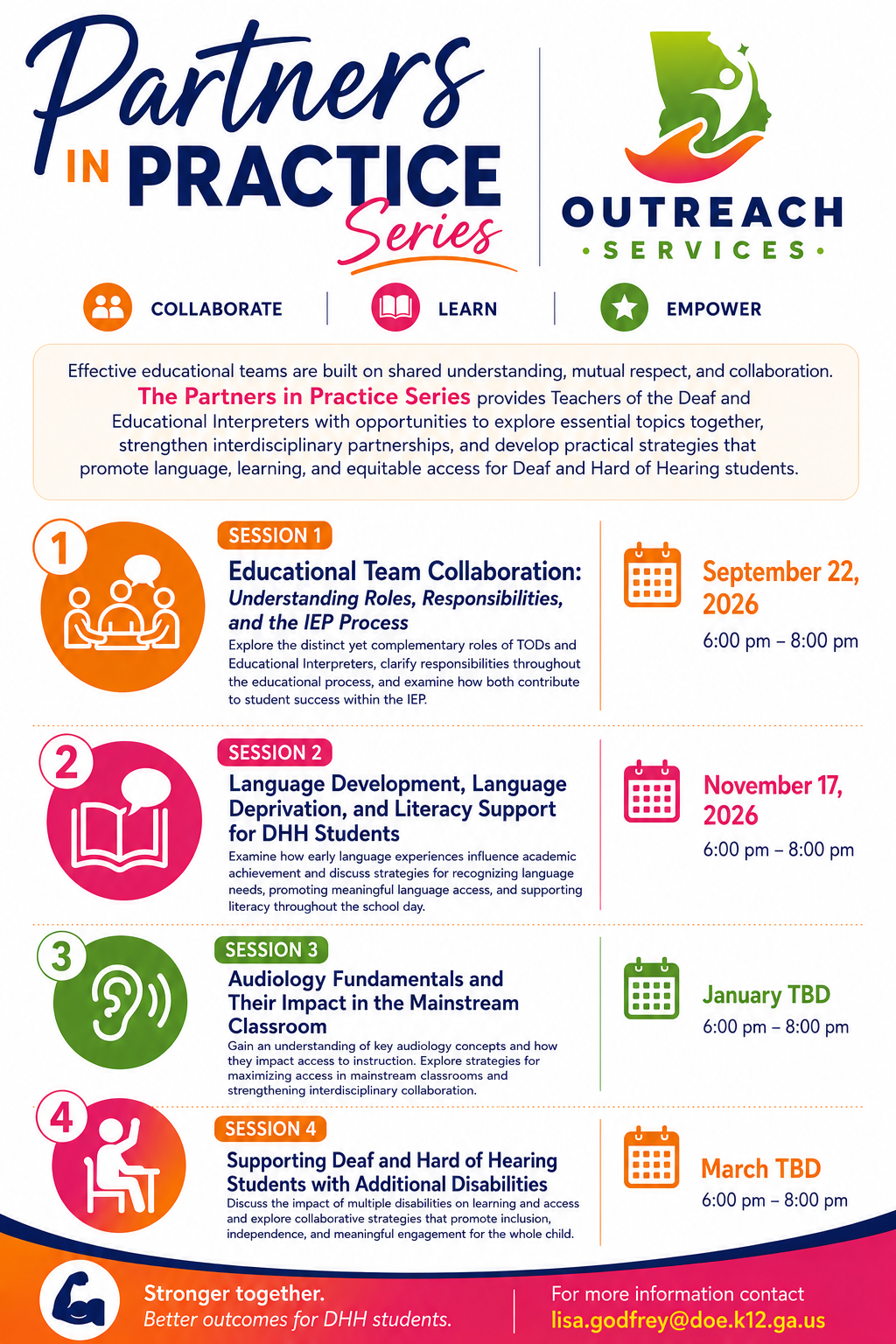
Educational Team Collaboration: Understanding Roles, Responsibilities, and the IEP Process
August 25, 2026
DCMP Resources for School Interpreters
Research shows that the use of multimedia is beneficial to all students. However, it is not always easy to find educational media with high-quality captions, and almost none have ASL. The Described and Captioned Media Program is a federally funded program that provides free accessible educational videos and much more. In this presentation, you'll learn about the myriad of resources DCMP has for students, teachers, and interpreters.

November 17, 2026
Language Development, Language Deprivation, and Literacy Support for DHH Students
Language is the foundation of learning, literacy, and academic success. This session explores the relationship between language development, language deprivation, and literacy outcomes for Deaf and Hard of Hearing (DHH) students. Participants will examine how early language experiences influence academic achievement and discuss the unique yet complementary roles of Teachers of the Deaf (TODs) and Educational Interpreters in supporting language-rich learning environments. Through research-based practices and collaborative discussion, participants will identify strategies for recognizing language needs, promoting meaningful language access, and intentionally supporting literacy throughout the school day. The session concludes with facilitated conversations centered on real-world scenarios and collaborative problem-solving.
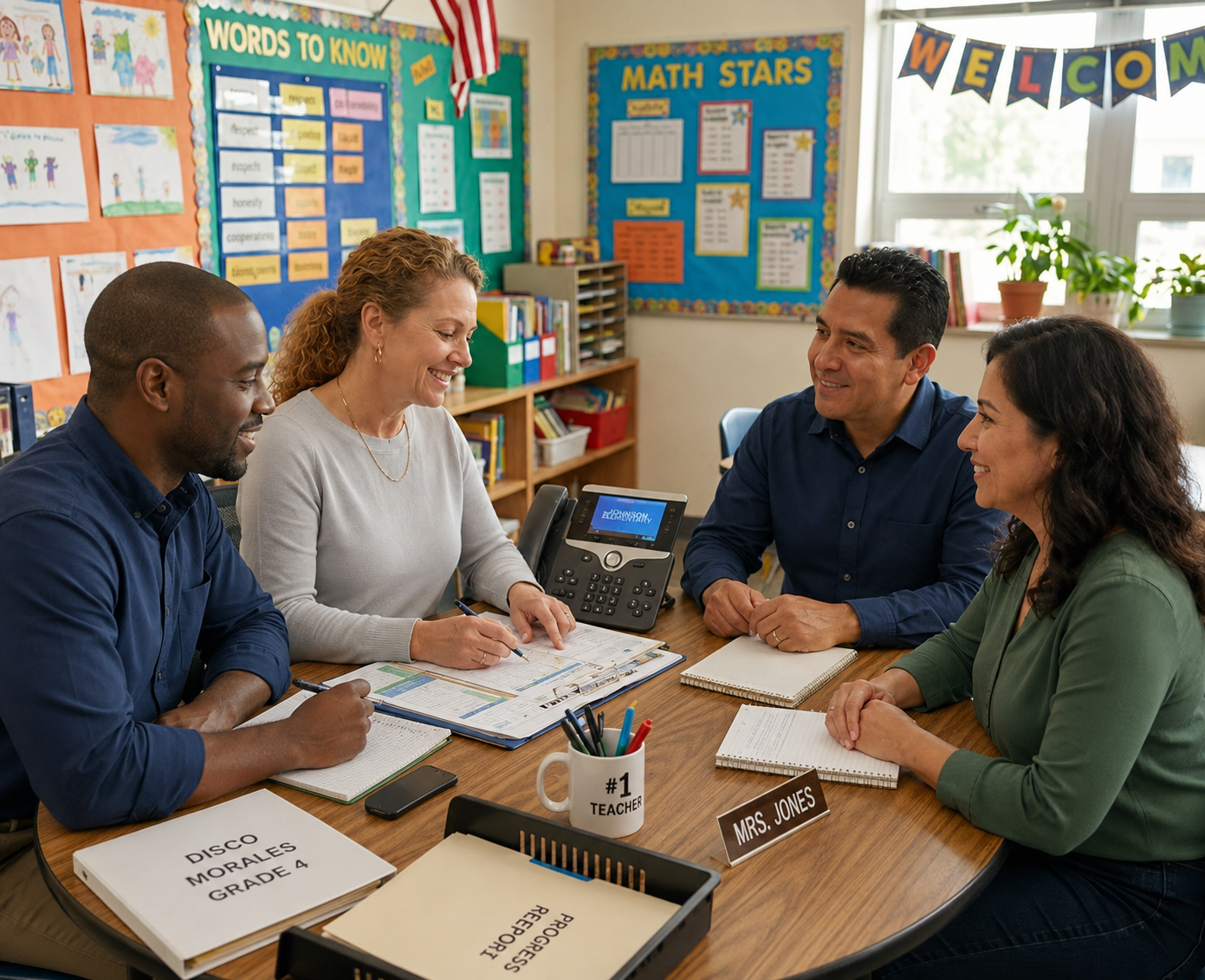
Effective collaboration between Teachers of the Deaf (TODs) and Educational Interpreters is essential to ensuring that Deaf and Hard of Hearing (DHH) students have meaningful access to instruction and educational services. This session will explore the distinct yet complementary roles of each professional, clarify responsibilities throughout the educational process, and examine how both contribute to student success within the Individualized Education Program (IEP) process.
Participants will discuss common areas of role overlap, communication challenges, and practical strategies for building stronger collaborative partnerships. Following the presentation, attendees will participate in facilitated small-group discussions to reflect on their experiences, explore real-world scenarios, and identify actionable strategies for strengthening collaboration within their educational teams.

December 5, 2026
Understanding the Language Of Math
This workshop is intended to provide K-12 educational interpreters with a foundation in basic mathematics and equip them with a number of strategies to choose from while interpreting math in the classroom. Throughout the workshop, interpreters will engage in deliberate practice in the form of listening, reflecting, consecutive and simultaneous interpreting, and collegial discussions regarding the aforementioned deliberate practice. This deliberate practice will deepen participants’ understanding of math-related content, as well as their own interpreting processes.
October 17, 2026
Classifiers in STEM: A Resource for Conceptual Clarity
In the K–12 classroom, an interpreter is often the bridge between a complex scientific phenomenon and a student’s "aha!" moment. However, when STEM subjects are on the focus, that divide becomes even more expansive. Traditional sign vocabulary can be missing, and heavy fingerspelling can leave a student—especially one experiencing language deprivation—lost in a sea of letters.
This interactive, hands-on workshop moves beyond the "label" and dives into the depiction. We will explore how to utilize Classifiers (Depicting Verbs) to transform abstract STEM concepts into visual, three-dimensional stories. Participants will learn to move away from the "English on the hands" approach and towards breaking form to provide more clarity to the students they work with.